China Top 10 Manufacturing Equipment Suppliers?
China’s manufacturing equipment sector is vast, competitive, and difficult to judge from product catalogs alone. The country supplies CNC machines, injection molding systems, laser cutters, industrial robots, packaging lines, and complete factory solutions. This guide examines ten leading Chinese suppliers and explains where each company may fit different production needs.
A reliable comparison should consider accuracy, equipment lifespan, automation capability, maintenance response, export experience, and total ownership cost. Factory visits, sample testing, and after-sales records often reveal more than impressive brochures. As quality expert W. Edwards Deming said, “Quality comes not from inspection, but from the improvement of the production process.” That principle matters when selecting manufacturing equipment for demanding operations.
The companies discussed here serve different industries. Some focus on heavy-duty metalworking. Others specialize in electronics, plastics, logistics, or intelligent production lines. Their strengths are not identical. One supplier may offer excellent precision but limited overseas support. Another may provide fast service while lacking advanced software integration.
That is worth admitting.
This ranking is not absolute. Supplier performance can vary by model, region, project size, and installation team. Prices also change with specifications, tariffs, shipping conditions, and customization. Buyers should verify certifications, inspect reference installations, and request realistic production trials before signing contracts.
The goal is practical guidance, not a perfect verdict. With careful comparison, manufacturers can identify dependable partners and avoid choosing equipment based only on low price or promotional claims.
Definition and Scope of China’s Manufacturing Equipment Industry
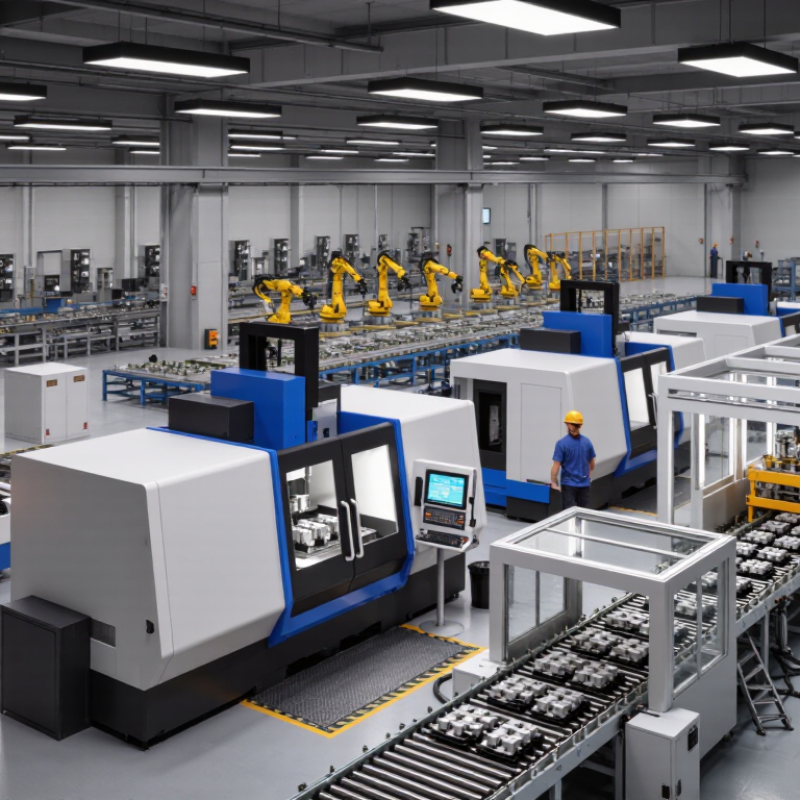
China’s manufacturing equipment industry covers more than machine builders. It includes companies that design, produce, integrate, install, and maintain industrial equipment. Its scope commonly includes CNC systems, forming machines, welding lines, material-handling units, inspection tools, and automated production cells.
A top-ten supplier list should reflect this broader structure. Some suppliers manufacture complete machines, while others provide control systems, precision components, or factory integration. These roles are different, but they often connect on one production line. In practice, buyers should examine accuracy, operating speed, energy use, safety design, spare-parts access, and service response. Installation quality also matters. A reliable machine can underperform when commissioning is rushed.
That distinction matters.
Tips: Define the equipment category before comparing suppliers. Separate original manufacturing from system integration. Request recent test records, maintenance procedures, and realistic production data. Check whether local technicians can support installation and training. Factory visits can reveal details that brochures hide, such as cable routing, noise levels, workflow congestion, and unfinished protective covers. A ranking may look objective, yet its criteria can remain unclear. This is an area worth questioning. Supplier selection becomes more dependable when technical evidence, user experience, compliance records, and lifecycle costs receive equal attention.
Key Criteria for Ranking the Top Equipment Suppliers
Ranking China’s top manufacturing equipment suppliers requires more than comparing revenue. The International Federation of Robotics reported 276,288 industrial robots installed in China during 2023, representing 51% of global installations. This scale makes delivery capacity important, but it does not prove equipment quality. A reliable ranking should examine verified uptime, operating accuracy, maintenance response, and performance across real factories.
Technical capability deserves equal weight. Reviewers should check automation integration, energy consumption, software compatibility, and the supplier’s ability to customize tooling. The International Energy Agency reports that industry accounts for about 37% of global final energy use. Therefore, efficient equipment can influence both production costs and emissions. Certification under standards such as ISO 9001, documented safety testing, and traceable component sources also strengthen supplier credibility.
Service often separates a strong supplier from an attractive quotation. Assess spare-parts availability, technician coverage, training hours, warranty clarity, and total cost over ten years. The World Bank’s Logistics Performance Index shows that delivery reliability remains a measurable business factor, not a minor convenience. Factory visits and customer interviews should support every claim. Data can mislead. A supplier may report excellent average uptime while smaller factories receive slower support. I would assign weighted scores, but keep a human review for unusual projects. The method is practical, though never perfect.
China’s Top 10 Manufacturing Equipment Suppliers
China’s Top 10 Manufacturing Equipment Suppliers are best assessed through capability, not advertising visibility. The leading group usually covers CNC machining, injection molding, laser processing, packaging, welding, textile, food processing, warehouse automation, testing, and industrial power equipment. Each supplier should show detailed specifications, production photographs, inspection records, and clear maintenance procedures. A serious supplier can explain spindle speed, tolerance ranges, cycle time, energy use, and expected service life without vague promises.
Factory visits reveal more than polished catalogs. I look for organized assembly areas, calibrated measuring tools, traceable components, and technicians who answer practical questions. References from similar factories also matter, especially when they include installation results and downtime data. A supplier may offer a lower purchase price, yet spare-part delays can increase the real cost. I once gave too much weight to an attractive quotation. That judgment needed correction. Buyers should compare acceptance testing, operator training, warranty terms, software support, and shipment protection. Independent audits can strengthen confidence, while documented quality systems improve accountability. Even experienced buyers should verify current capacity, because subcontracting practices may change after an order is signed. Small details matter. A readable manual matters. Clear communication matters.
Core Products, Technologies, and Industrial Applications
China’s top ten manufacturing equipment suppliers are best compared by product depth, process control, and application results. Core categories include CNC machine tools, industrial robots, laser systems, injection molding equipment, packaging lines, testing instruments, warehouse automation, compressors, semiconductor equipment, and industrial software.
Industrial robots show China’s scale. The International Federation of Robotics reported 276,288 robot installations in China during 2023, representing 51% of global installations. This demand supports suppliers offering robotic welding, palletizing, assembly, and vision inspection. Semiconductor equipment also remains strategic. SEMI’s World Fab Forecast 2024 identified China as one of the largest regions for planned fabrication capacity, increasing demand for deposition, cleaning, metrology, and material-handling systems. Small tolerances matter here.
Supplier evaluation needs practical evidence. Check cycle time, positioning accuracy, energy use, spare-part availability, and local service response. A laser cutting system may look impressive in a showroom, yet unstable gas control can damage thin stainless-steel edges. A packaging line may reach its advertised speed only with uniform materials and experienced operators. That gap deserves attention.
UNIDO’s International Yearbook of Industrial Statistics 2024 places China among the world’s dominant manufacturing economies, with roughly one-third of global manufacturing value added. This industrial base encourages vertical integration, but integration does not guarantee reliability. Factory trials, maintenance records, and customer-site references remain essential before ranking any supplier.
Market Trends and Selection Considerations for Buyers
China’s top ten manufacturing equipment suppliers are not always the same across every sector. Rankings change by machinery type, production scale, and export experience. Current market trends favor automated lines, lower energy use, and remote equipment monitoring. Buyers also expect faster customization for electronics, automotive, packaging, and precision components.
A practical evaluation starts with the factory’s real output. Ask for test-run videos, machine tolerances, cycle times, and power consumption records. A polished catalog is not enough. Request references from comparable plants, not only famous customers. Check whether spare parts can arrive within a defined period. Local service coverage matters when a production line stops at 2 a.m.
Supplier audits should examine engineering staff, quality controls, software security, and documentation. Confirm whether drawings, manuals, and training are available in clear technical English. Compare the complete ownership cost, including installation, tooling, maintenance, and upgrades. The lowest quotation may hide weak after-sales support. That mistake is expensive. A more careful buyer may also inspect weld quality, cable routing, safety guards, and emergency-stop testing before signing. However, even a detailed checklist has limits; real performance can change after several months of continuous use. Build acceptance milestones into the contract, and keep room for independent inspection.
China Top 10 Manufacturing Equipment Suppliers: Market Trends and Selection Considerations
China’s industrial robot installations increased substantially from 2019 to 2022, reflecting continued investment in factory automation and smart manufacturing. The slight decline in 2023 indicates a more selective investment environment, where buyers should compare technical capability, system integration, delivery reliability, lifecycle service, spare-parts availability, and total cost of ownership rather than relying on supplier scale alone.
Source: International Federation of Robotics, World Robotics reports. Values represent annual industrial robot installations in China and are shown in thousand units.