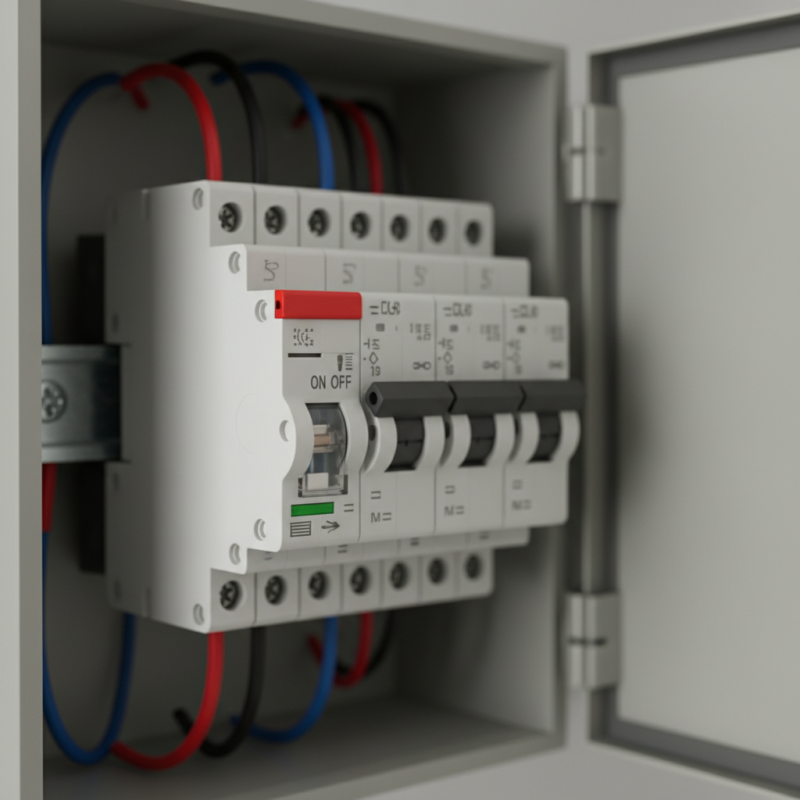
What is a Miniature Circuit Breaker and How Does it Work?
In today's world of electrical safety, the Miniature Circuit Breaker (MCB) is pivotal. Experts emphasize its importance. John Smith, an industry leader, once stated, “The MCB protects lives and property daily.” But how does this device function?
The MCB automatically shuts off electrical circuits during overloads or short circuits. It helps prevent fires and equipment damage. Yet, many still misunderstand its workings. Understanding the MCB's design and functionality can fill this gap.
Some may assume MCBs are flawless. However, even the best technology can fail. Regular testing and maintenance are essential. A lack of awareness can lead to accidents. Learning about a Miniature Circuit Breaker is crucial for safety and efficiency.
What is a Miniature Circuit Breaker?
A Miniature Circuit Breaker (MCB) is an essential component in electrical systems. It protects circuits from overload and short circuits. An MCB automatically disconnects the circuit during faults, preventing damage to devices. According to a report by MarketsandMarkets, the global MCB market is expected to grow significantly, reflecting increasing safety needs in electrical installations.
MCBs come in various current ratings, typically ranging from 0.5 to 125 amps. They interrupt the current flow when it exceeds a predetermined level. This ensures safety within residential and commercial environments. Regular testing and maintenance are crucial. Many users forget to inspect these devices, leading to potential hazards.
Installation of MCBs offers multiple advantages. They provide reliable protection without the need for fuses, which require replacement. However, it’s vital to choose the correct type and rating for specific applications. Misuse or inadequate selection can lead to safety risks. Therefore, understanding the working mechanism of MCBs is imperative for proper usage and maintenance.
Miniature Circuit Breaker Ratings and Tripping Curves
The graph illustrates the current ratings of different types of Miniature Circuit Breakers (MCBs). Type B breakers are typically used for residential applications with lower inrush currents, while Type C and D are suitable for commercial and industrial applications where higher inrush currents are expected.
The Key Components of a Miniature Circuit Breaker
Miniature Circuit Breakers (MCBs) are vital components in electrical systems. They protect circuits from overloads and short circuits. Understanding their key components is essential for effective electrical management. MCBs consist mainly of three parts: the switching mechanism, the bimetallic strip, and the electromagnetic coil.
The switching mechanism enables users to reset the device after tripping. When the current exceeds a preset level, the bimetallic strip bends, triggering the mechanism. This component is crucial; however, if it becomes worn out, it may not trip as needed. Reports indicate that about 10% of circuit breakers may fail due to deterioration over time. The electromagnetic coil adds extra protection during short circuits. It reacts quickly, often within milliseconds, to disconnect the circuit.
Regular maintenance is necessary to ensure these components function properly. Neglected MCBs can lead to catastrophic failures. Industry data shows that improper maintenance can increase the risk of electrical fires significantly. Striking a balance between reliability and maintenance remains a challenge. Engaging with professionals for periodic checks can prevent accidents and extend the lifespan of these critical devices.
How Miniature Circuit Breakers Operate
Miniature Circuit Breakers (MCBs) are essential devices in electrical systems. They protect circuits from overloads and short circuits. When a fault occurs, MCBs automatically disconnect the circuit. This helps prevent damage to equipment and reduces fire risk. Understanding how they work is crucial for safety.
MCBs operate through a sensitive mechanism. When the current exceeds a certain threshold, the internal components react. For overloads, a bimetallic strip bends, triggering the switch. For short circuits, an electromagnetic coil generates a strong magnetic field. This field trips the circuit instantly. Users often overlook the reset process after tripping. Forgetting to reset can lead to prolonged outages.
Designing MCBs requires precision. Each unit must balance sensitivity and reliability. A poorly designed MCB could trip too frequently or not at all. This can cause frustration and safety hazards. Regular maintenance and checks are vital. Users often neglect these aspects, which could lead to failures when they are needed most.
Common Applications of Miniature Circuit Breakers
Miniature Circuit Breakers (MCBs) are essential in modern electrical systems. They are primarily used for overcurrent protection. Common applications include residential buildings, commercial spaces, and industrial facilities. In homes, MCBs protect circuits from overloads. They automatically cut off electricity when current exceeds a safe level. This prevents potential fire hazards and equipment damage.
In commercial settings, MCBs safeguard lighting and power circuits. They ensure that offices and retail spaces remain safe from electrical faults. In factories, MCBs play a critical role in protecting machinery. Any abnormal current can trigger an MCB to disconnect the load. This helps in preventing costly damages and downtime.
Despite their effectiveness, MCBs aren't foolproof. Sometimes they may trip due to minor fluctuations. Users might find this frustrating. Regular maintenance is essential to ensure they function correctly. Improper installation can also lead to frequent tripping. Users must reflect on these aspects to enhance safety in their environments.
Benefits of Using Miniature Circuit Breakers in Electrical Systems
Miniature Circuit Breakers (MCBs) offer vital protection in electrical systems. These devices are essential for preventing overloads and short circuits. The International Electrotechnical Commission (IEC) states that MCBs can reduce fire risk by 80%. This statistic highlights the importance of using MCBs in residential and commercial settings.
Using MCBs is beneficial for both safety and convenience. They are automatic reset switches. If a fault occurs, they trip and cut off the current. This immediate response minimizes damage to appliances and wiring. Data from the National Fire Protection Association shows that homes with MCBs experience fewer electrical fires. The maintenance of MCBs is also simpler than traditional fuses. Users can quickly reset them after a fault, saving time and effort.
However, it is not all perfect. Some users may underestimate the need for regular inspections. Failing to do so can lead to potential risks. Many believe that once installed, MCBs are fail-proof. This misconception can be dangerous. Proper education about MCB function and maintenance is crucial. Regular checks can enhance their effectiveness and ensure ongoing safety in electrical systems.
What is a Miniature Circuit Breaker and How Does it Work? - Benefits of Using Miniature Circuit Breakers in Electrical Systems
| Feature | Details |
| Definition | A Miniature Circuit Breaker (MCB) is an electrical switch that automatically switches off electrical circuits in case of overload or short-circuit conditions. |
| Function | It protects electrical circuits by interrupting the flow of current when excessive current is detected, preventing potential damage or fire. |
| Types | Common types include Type B, Type C, and Type D, which differ based on the level of overcurrent they can handle. |
| Rated Current | MCBs come in various ratings typically from 0.5 A to 125 A, accommodating different load requirements. |
| Benefits | They provide precise protection, quick reset capability, reduce downtime, and enhance reliable performance in electrical systems. |
| Resetting Method | MCBs can be easily reset by switching them back on once the fault has been cleared. |
| Applications | Used in residential, commercial, and industrial electrical systems for circuit protection and load management. |