What is a Compact Wheel Loader and How Does It Work?
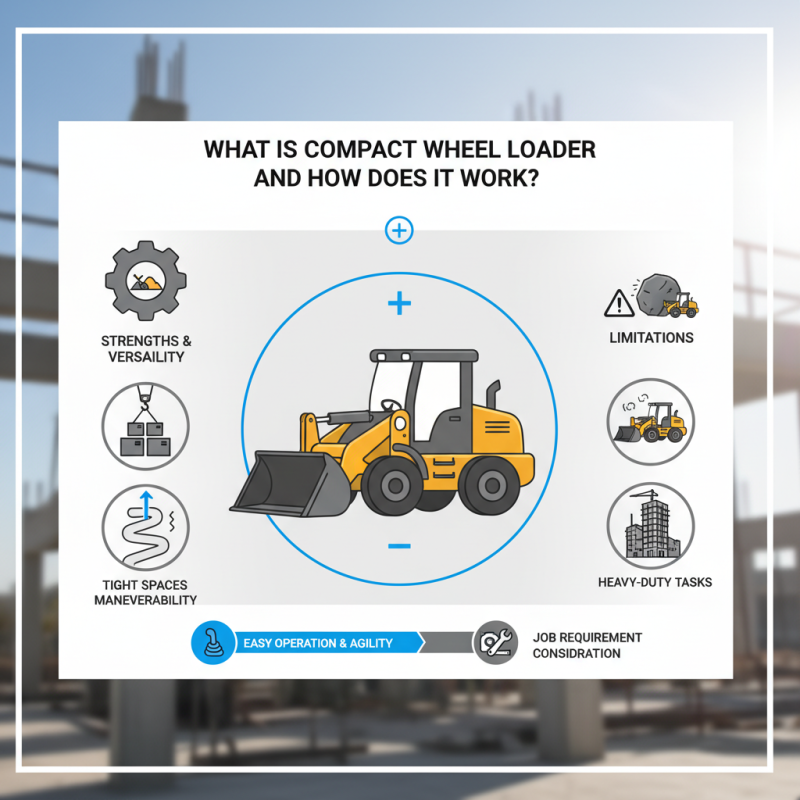
A Compact Wheel Loader is a versatile machine commonly found on construction sites. Its small size makes it ideal for maneuvering in tight spaces. These loaders often handle various tasks, from moving dirt to lifting heavy materials.
The design of a Compact Wheel Loader allows for easy operation. Operators can rely on its agile capabilities to navigate obstacles with precision. However, it’s crucial to recognize that not every job suits this machinery. Some projects may require larger equipment for efficiency.
Understanding the limitations of a Compact Wheel Loader is just as important as acknowledging its strengths. While it excels in flexibility, heavy-duty tasks may exceed its capacity. Careful consideration of the job requirements ensures optimal use of this machine.
Definition and Features of Compact Wheel Loaders
Compact wheel loaders are versatile machines found on various job sites. They are characterized by their small size, making them ideal for tight spaces. Typically, these loaders weigh between 3,000 to 12,000 pounds. Their compact design allows operators to navigate confined areas where larger equipment cannot access. This feature is crucial in urban construction projects and landscaping applications.
These machines often come equipped with powerful engines. Many models offer horsepower ranging from 50 to 100, enhancing their performance. A report by the American Rental Association indicates a growing demand for compact wheel loaders, projecting a market growth of 5% annually. With a good breakout force, they handle heavy lifting effectively. Operators use attachments like buckets and forks, which enhance their functionality.
Despite their benefits, compact wheel loaders have challenges. The stability of smaller models can be a concern on uneven terrain. Additionally, their lifting capacities may fall short compared to larger loaders. It's essential to evaluate site conditions and loading needs. Some operators may feel constrained by these limitations and may benefit from reevaluating their equipment choices. Understanding these nuanced features is crucial for optimizing work efficiency.
Applications and Industries Utilizing Compact Wheel Loaders
Compact wheel loaders are versatile machines used in various industries. They excel in tight spaces where larger machinery cannot operate effectively. Construction sites often rely on them for moving materials. These loaders can transport gravel, sand, or soil with ease.
Landscapers also find compact wheel loaders beneficial. They can help with digging and transporting materials for projects. In agriculture, these loaders assist in moving feed and supplies around farms. Their small size allows them to navigate fields and barns easily.
Despite their advantages, some challenges arise. Operators must be cautious about load limits. Overloading can lead to instability. Additionally, visibility can be limited due to their compact nature. Proper training is essential for safe operation. Awareness of surroundings is crucial in busy environments. These machines offer great utility, but also require careful handling.
Mechanics of Operation: Key Components and Their Functions
Compact wheel loaders are versatile machines, commonly used in construction and landscaping. Their operation relies on several key components that work in harmony. The engine powers the loader, providing the necessary force for various tasks. A hydraulic system controls the loader's arms and bucket, allowing for precise movements.
The loader features a sturdy frame that supports its weight and stability during operation. The bucket, a crucial attachment, can be easily swapped out for other tools. This flexibility enhances productivity on job sites. The tires provide traction and maneuverability, especially in tight spaces. Operators should regularly check the tire pressure to avoid unexpected issues.
Another important aspect is the cab where the operator controls the machine. Visibility is often limited, which can lead to accidents. Effective training for users is vital. Many operators may overlook the need for routine maintenance, which can compromise performance. Keeping the machinery in top condition is essential for safe operation.
Performance Metrics: Capacity, Power, and Efficiency Ratings
Compact wheel loaders are versatile machines used in various construction and landscaping tasks. Their performance metrics focus on capacity, power, and efficiency ratings. Each of these factors plays a crucial role in determining how effectively a loader can operate in different environments.
Capacity refers to the load a compact wheel loader can handle. Generally, these machines can lift between 1,000 to 3,000 pounds. This range allows them to tackle various tasks, from moving soil to handling materials. However, overloading can lead to safety issues and increased wear and tear on the machine.
Power is another key factor. It influences the loader's ability to operate in tough conditions. A more powerful loader can push through rough terrain, making it suitable for challenging jobs. Yet, with more power comes the risk of excessive fuel consumption. A balance between power and efficiency is often a point of reflection for operators. Efficiency ratings indicate how well the machine uses fuel while performing tasks. Understanding these scores can help operators choose the best loader for their needs. Balancing performance with sustainability is essential in today's world.
What is a Compact Wheel Loader and How Does It Work? - Performance Metrics: Capacity, Power, and Efficiency Ratings
| Model | Operating Weight (lbs) | Engine Power (HP) | Bucket Capacity (cu yd) | Lift Height (in) | Fuel Efficiency (mpg) |
| Model A | 5,000 | 75 | 1.0 | 90 | 15 |
| Model B | 5,500 | 85 | 1.2 | 92 | 14 |
| Model C | 6,000 | 90 | 1.3 | 94 | 13 |
| Model D | 6,500 | 100 | 1.5 | 95 | 12 |
Maintenance Best Practices for Compact Wheel Loaders
Compact wheel loaders are versatile machines used in construction and landscaping. To keep them running efficiently, proper maintenance is key. Regularly checking fluid levels is essential. Oil, hydraulic fluid, and coolant should be inspected frequently. Neglecting these checks can lead to overheating or mechanical failures.
Daily inspections also play a vital role. Operators should look for any visible leaks or unusual noises. Brief pre-operation checks can prevent bigger issues later. Tires should be inspected for wear and proper inflation. Under-inflated tires affect performance and fuel efficiency. Cleaning the loader after use is another habit to consider. Dirt and debris can accumulate and lead to corrosion over time.
In the long run, replacing worn parts is necessary. Ignoring age or wear can result in larger breakdowns. It’s not uncommon for operators to overlook small issues until they become significant. Keeping a maintenance log helps track repairs and replacements, which can improve overall performance. Regular maintenance isn’t just beneficial; it’s vital for the longevity of compact wheel loaders.