How to Choose a Precision Machining Supplier?
Choosing a Precision Machining} supplier is not simply a search for the lowest quotation. It is a decision about process control, technical judgment, and long-term reliability. A supplier may promise tight tolerances, yet the real evidence appears in inspection records, machine capability, and consistent delivery.
W. Edwards Deming, a respected manufacturing quality expert, said, “Quality comes not from inspection, but from the improvement of the production process.” His principle remains practical on the shop floor. Ask how the supplier controls tool wear, temperature changes, material batches, and operator variation. Examine whether parts are measured with calibrated CMM equipment, micrometers, or optical systems suited to the tolerance.
Look closely.
A capable supplier should explain its process without hiding behind vague claims. Request material certificates, first-article inspection reports, traceability procedures, and examples of similar components. For a stainless-steel housing, details such as burr removal, surface roughness, thread protection, and packaging can determine whether the part works after assembly. Capacity also matters. One excellent prototype does not prove stable production performance.
Experience deserves attention, but it should not replace evidence. Certifications can support trust, although a certificate alone cannot guarantee accurate parts. Review corrective-action records and ask how failures are investigated. Some suppliers may resist these questions. That hesitation is informative.
This guide examines the practical factors behind supplier selection, including engineering communication, equipment capability, quality systems, pricing, lead times, and scalability. The evaluation is not perfect; every project has unknowns. Still, a disciplined review can reduce surprises and reveal whether a supplier truly fits your application.
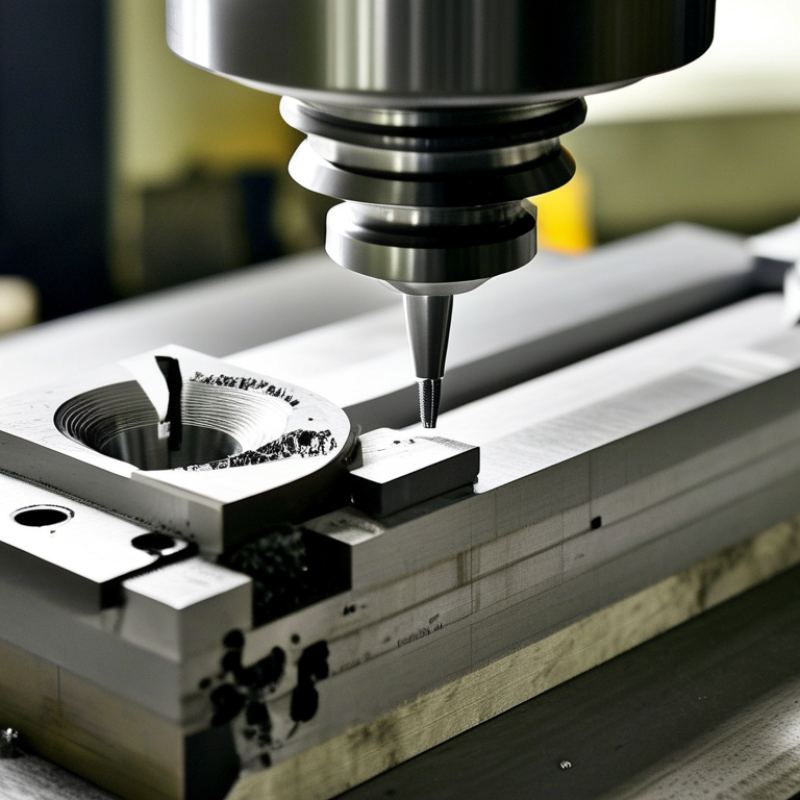
Define Your Precision Machining Requirements
How to Choose a Precision Machining Supplier?
Define Your Precision Machining Requirements
A supplier cannot quote accurately until your machining requirements are clear. Start with the part’s function, not only its drawing. Explain where it will be installed, what loads it will face, and how often it will operate. A small housing may need different precision than a rotating shaft.
State the material grade, finished dimensions, critical tolerances, surface roughness, and required quantity. Include thread details, edge breaks, heat treatment, and coating requirements. A tolerance of ±0.01 mm can affect tooling, inspection time, and cost. Identify datums and critical features directly on the drawing. Ambiguous notes create avoidable questions.
Share the latest CAD file and drawing revision. Confirm the file format before production. Ask how the supplier will inspect key dimensions. A capable team should explain its measuring equipment, sampling method, and inspection records. Request a sample report when practical. This reveals whether the supplier understands your acceptance criteria.
Do not hide the operating environment. Temperature, moisture, chemicals, and contact with other parts can change material choices. I once underestimated a surface finish requirement because the part looked simple. The first review exposed a sealing problem. That mistake was useful, but preventable. Leave room for technical discussion, because your first specification may not be perfect. Clear requirements help a supplier judge capability, schedule, risks, and realistic pricing.
Assess Supplier Capabilities, Equipment, and Materials
How to Choose a Precision Machining Supplier?
A capable supplier should match its equipment to your part’s actual geometry. Ask whether it operates CNC milling, turning, grinding, or five-axis machines. Check the machine’s working envelope, spindle speed, and positioning accuracy. These details matter more than a polished website. Request examples of similar components, especially parts with thin walls, deep cavities, or tight concentricity requirements. Numbers matter.
Inspection Capability Inspection capability deserves equal attention. Confirm that the supplier uses calibrated coordinate measuring machines, height gauges, and surface-finish equipment. Ask to review a sample inspection report before production begins. The report should connect each measurement to a drawing requirement. Process capability data can reveal unstable dimensions early. However, capability figures may describe ideal batches, not every future order. Question them carefully.
Material Control Material control often separates reliable suppliers from convenient ones. Require material certificates, heat numbers, and traceability from receipt through shipment. Confirm their experience with aluminum, stainless steel, titanium, engineering plastics, or your specified alloy. Ask how they prevent mix-ups between similar materials. A small labeling error can damage an otherwise accurate part. I would also request a first-article inspection and a clear response plan for nonconforming pieces. Some suppliers resist extra documentation. That resistance is worth noticing. Capability is not only machinery; it is disciplined evidence, repeatable processes, and honest communication when something goes wrong.
Verify Quality Systems, Certifications, and Inspection Methods
A precision machining supplier should prove quality, not merely promise it. Ask for a current ISO 9001 certificate, then verify its registration, scope, and expiration date. The ISO Survey 2022 reported 1,265,216 valid ISO 9001 certificates worldwide. That number shows broad adoption, but certification alone does not confirm machining capability. The certificate must cover the facility producing your parts.
Request process documents that match your risks. These may include control plans, equipment calibration records, material traceability, nonconformance reports, and corrective-action evidence. For critical dimensions, ask how the supplier controls variation. Cp and Cpk studies can reveal whether a process remains stable, rather than passing one inspection occasionally. I have seen attractive quality manuals fail to explain who stops production after a drift. That gap matters.
Inspection methods should fit the drawing and tolerance. A coordinate measuring machine can verify complex geometry, while calibrated micrometers may suit simple diameters. Ask for measurement uncertainty, calibration intervals, and gauge repeatability and reproducibility results. NIST’s Engineering Statistics Handbook emphasizes that measurement variation can distort process decisions. The 2023 World Quality Report also identifies data quality and traceability as continuing barriers to reliable quality decisions. Ask for sample inspection reports with actual values, not only pass-or-fail statements.
Short evidence helps. A supplier that welcomes an audit, explains an occasional failure, and shows corrective action is often more credible than one claiming perfect performance.
Compare Lead Times, Pricing, Communication, and Support
Choosing a precision machining supplier requires more than comparing hourly rates. Lead time should run from drawing approval to inspected delivery, not quotation date. Ask for a sample production schedule. It should show programming, material arrival, machining, finishing, and inspection. A supplier promising ten days may still need two weeks for outside processing. That gap matters. In my experience, realistic estimates are more valuable than attractive promises.
Pricing deserves a line-by-line review. Check setup charges, tooling, material certification, inspection, packaging, and shipping. A lower quote can hide assumptions about tolerances or surface finish. Request clarification when a critical dimension lacks an inspection method. It is a small question. It can prevent a costly remake. Transparent pricing does not guarantee perfect work; specifications sometimes change after production begins. Allowing controlled revisions is wiser than pretending every drawing is final.
Communication is easiest to judge before the purchase order. Send a technical question and note the response time, clarity, and ownership. Can an engineer explain how a thin wall will be held during machining? Can the team share photos, measurement results, and corrective actions? Support should continue after delivery, especially when parts fail assembly testing. A supplier that listens without defensiveness may be safer than one with impressive equipment. I would also test a small pilot batch. It may cost more per part, but it reveals scheduling habits, reporting quality, and problem-solving under pressure.
How to Choose a Precision Machining Supplier?
Compare the factors that most directly affect production performance: lead time, pricing, communication, and after-sales support.
Scores are based on a 100-point procurement scorecard. Lead-time performance uses shorter delivery times, pricing uses relative quotation competitiveness, communication measures response speed and clarity, and support reflects issue resolution and engineering assistance. Higher scores indicate stronger overall performance.
Evaluate Samples, Reviews, and Long-Term Supplier Fit
How to Choose a Precision Machining Supplier?
Evaluate Samples, Reviews, and Long-Term Supplier Fit
A machined sample reveals more than a polished sales presentation. Check its surface finish, edge quality, burr control, and dimensional consistency. Request the drawing, material certificate, and inspection report behind the sample. If possible, measure critical features with a calibrated CMM or micrometer. One sample can mislead. I once trusted an excellent prototype before learning that production parts had unstable hole locations.
Reviews deserve practical scrutiny. Look for comments about delivery accuracy, engineering communication, packaging, and corrective actions. Generic praise means little. Ask whether the reviewer purchased similar materials, tolerances, and quantities. A reliable supplier should explain negative feedback without becoming defensive. Their response often shows more maturity than a perfect rating.
Long-term fit depends on repeatable systems, not friendly conversations alone. Review process control, operator training, equipment maintenance, and traceability records. Confirm how the supplier handles engineering changes, nonconforming parts, and urgent demand. Ask for realistic lead times during busy periods. Small details matter, such as labeled inspection sheets and protective packaging that prevents scratches.
Run a limited pilot order. Track every deviation. Compare promised lead time with the actual delivery date, then record response speed and rework quality. Pricing may look attractive at the beginning. Yet inconsistent batches can consume engineering hours and delay assembly. Your evaluation should include technical capability, communication habits, documentation quality, and the supplier’s willingness to improve after an uncomfortable mistake.
How to Choose a Precision Machining Supplier? - Evaluate Samples, Reviews, and Long-Term Supplier Fit | Candidate | Sample Evaluation | Reviews and Quality Evidence | Long-Term Supplier Fit | Weighted Score | Fit Assessment |
Sample Conformity
(%) | Critical Cpk
Capability | Surface Finish
Result | Reference Calls
Completed | Inspection Equipment
Calibration | Corrective Action
Closure (Days) | On-Time Delivery
(12 Months) | Typical Lead Time
(Business Days) | Engineering Response
(Hours) |
| Candidate 01 | 99.2% | 1.67 | Ra 0.8 μm | 3 verified | 100% in date | 6 | 97.4% | 12 | 5.2 | 91/100 | Strong fit |
| Candidate 02 | 98.6% | 1.51 | Ra 1.6 μm | 2 verified | 100% in date | 8 | 95.8% | 15 | 7.0 | 86/100 | Strong fit |
| Candidate 03 | 96.9% | 1.34 | Ra 1.6 μm | 1 verified | 96% in date | 14 | 92.1% | 18 | 9.5 | 74/100 | Conditional fit |
| Candidate 04 | 99.0% | 1.58 | Ra 0.8 μm | 4 verified | 100% in date | 5 | 96.6% | 20 | 4.8 | 89/100 | Strong fit |
| Candidate 05 | 95.4% | 1.29 | Ra 3.2 μm | 2 verified | 91% in date | 19 | 89.7% | 10 | 11.0 | 67/100 | High risk |
| Candidate 06 | 98.1% | 1.45 | Ra 1.6 μm | 3 verified | 100% in date | 10 | 94.3% | 14 | 6.4 | 82/100 | Conditional fit |
Evaluation guide: Sample conformity measures dimensions accepted against the drawing and inspection plan. A critical-process Cpk of 1.33 or higher is commonly used as a minimum capability target for stable production. Weighted scoring: sample evaluation 35%, quality evidence and reviews 25%, delivery performance 20%, engineering responsiveness 10%, and corrective-action performance 10%.