Choosing the best stainless steel factory in China requires more than comparing polished websites or low quotations. Buyers need evidence of consistent quality, technical capability, and responsible business practices. A reliable factory should explain its grades clearly, including 304, 316L, 430, and custom specifications. It should also provide traceable mill certificates, inspection records, and realistic production timelines. These details matter when a shipment includes hundreds of sheets, pipes, or precision-fabricated components.
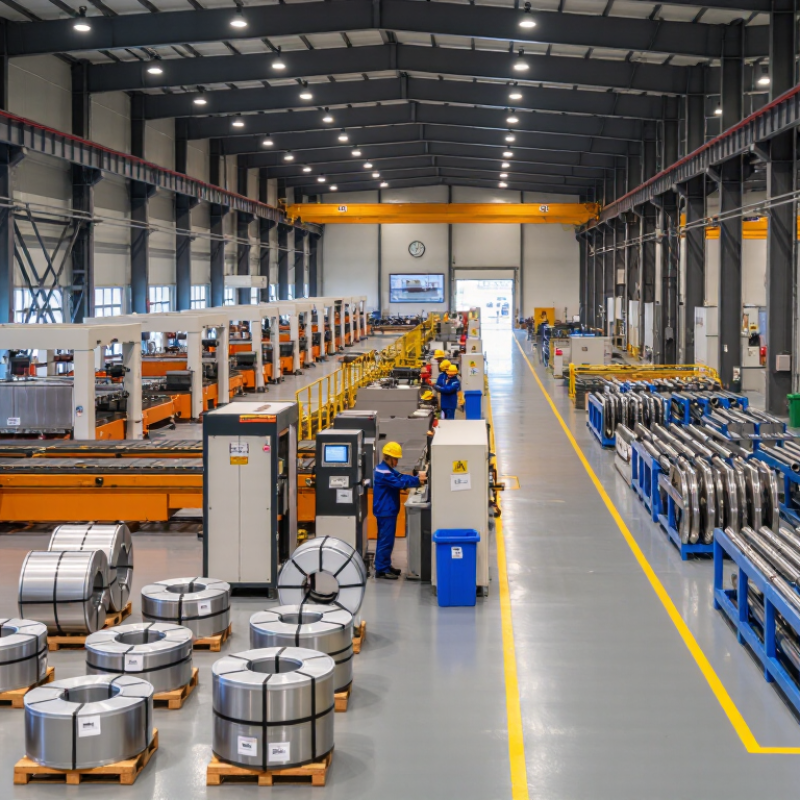
Quality becomes visible on the factory floor. Look for clean storage areas, labeled coils, calibrated testing equipment, and workers who understand surface finishes. A professional stainless steel factory should control welding, cutting, polishing, and packaging through documented procedures. Independent inspections can verify thickness, chemical composition, tensile strength, and surface condition before shipment. Certifications may support credibility, but they should never replace direct verification. Ask how the factory handles rejected materials, delayed orders, and customer complaints.
No factory is perfect. That matters.
The strongest suppliers communicate weaknesses instead of hiding them. Perhaps one facility offers excellent fabrication but limited export experience. Another may deliver quickly but struggle with unusual tolerances. This comparison should consider the buyer’s application, not only the supplier’s reputation. A food-processing project needs different controls from an architectural installation or marine component. Factory visits, sample orders, reference checks, and transparent contracts can reduce costly surprises. This guide examines those practical signals to identify a dependable partner, while recognizing that “best” depends on performance, risk, and long-term cooperation.
The best stainless steel factory is not simply the one offering the lowest quotation. It is the factory that controls quality from raw material receipt to final shipment. Experienced buyers should inspect heat-number traceability, production records, and inspection reports. Each coil, sheet, or pipe should connect clearly to its original material certificate.
Technical capability matters in daily production. A reliable factory checks chemical composition with laboratory equipment and verifies thickness, flatness, surface finish, and mechanical strength. For welded products, inspectors should examine seam quality and dimensional accuracy. Small details matter here. A clean production floor also reveals how seriously workers manage contamination and handling damage.
Independent audits can confirm whether written procedures match actual work. Relevant certifications help, but they never replace physical inspection or sample testing. A trustworthy factory explains limitations instead of promising perfection. No factory is flawless. Even strong producers may face delays, surface marks, or occasional rework. What matters is how openly they report problems and correct their causes. Buyers should review communication speed, packaging quality, loading photos, and after-sales records. A factory becomes dependable through repeated evidence, not impressive claims. Personally, I would value a transparent correction report more than a polished presentation. That choice may cost slightly more, but it reduces uncertainty during long-term cooperation.
Choosing the best stainless steel factory in China requires more than comparing quoted prices. The real test begins with material control, production discipline, and evidence. Ask how the factory verifies grade, thickness, surface finish, and heat number. A reliable supplier should provide mill certificates and traceable inspection records. During a practical audit, check whether coil tags match the paperwork. Small gaps here can become expensive problems later.
Manufacturing capability deserves close attention. Walk through the slitting, forming, welding, polishing, and packing areas. Look for calibrated gauges, clean storage racks, and protected sheet surfaces. Ask for recent sample measurements, not only attractive showroom pieces. Tolerances should match the agreed standard, such as ASTM, EN, or GB requirements. Independent testing can verify chemical composition, tensile strength, corrosion resistance, and dimensions. However, test reports may cover one batch only. That limitation matters.
A factory’s response to a defect reveals more than a sales presentation. Request a clear corrective-action record and realistic replacement terms. Confirm monthly capacity against your order pattern, not an impressive maximum figure. Review packaging details, including edge guards, moisture protection, labels, and loading photos. Communication also deserves testing. Send a technical question with several specifications and measure the reply. Fast answers are not always accurate answers. I would still inspect a first production lot before approving repeated orders. Factories can improve, but buyers must document every assumption.
Which Is the Best Stainless Steel Factory in China?
China’s stainless steel industry is concentrated in several production regions, each with different strengths. Jiangsu is known for integrated mills, advanced rolling lines, and large export capacity. Zhejiang supports many precision processors, especially for tubing, decorative sheets, and customized components. Guangdong has strong links to appliance, kitchenware, and architectural markets. Fujian and Shandong also contribute through melting, hot rolling, and specialized finishing operations.
Factory capability matters more than location alone. A reliable producer should control key stages, including raw material inspection, electric arc melting, refining, casting, hot rolling, cold rolling, and surface treatment. Ask whether the factory can provide heat numbers, mechanical test results, chemical analysis, and dimensional records. These details make quality easier to verify.
Look closely at the production floor. Clean storage areas, calibrated instruments, and clear batch labels reveal practical discipline. Experienced technicians should explain how they manage surface defects, flatness, weldability, and corrosion resistance. Third-party testing can strengthen confidence, but it does not replace factory process control.
The “best” factory depends on the application. A food-processing project may need hygienic surfaces and stable corrosion performance. Construction projects may prioritize thickness tolerance, appearance, and delivery volume. Some factories advertise broad capabilities but outsource important steps. That can create traceability gaps. I would compare sample results, audit production records, and test a small order before making a large commitment. Mistakes still happen, even in well-managed plants.av电影
| Production Region | Main Industrial Cluster | Typical Product Range | Factory Capabilities Commonly Available | Common Grades | Typical Buyer Applications | Logistics Advantage | Best Fit for Buyers |
|---|---|---|---|---|---|---|---|
| Jiangsu | Wuxi, Zhangjiagang, Taixing and surrounding Yangtze River Delta areas | Cold-rolled coils and sheets, hot-rolled coils, precision strips, welded pipes, seamless tubes, bars and fabricated components | Large-scale melting and rolling capacity in the wider region; slitting, leveling, polishing, cutting, pipe forming, annealing and surface finishing | 201, 304/304L, 316/316L, 321, 410, 430 and selected duplex grades | Industrial equipment, kitchenware, architectural panels, chemical equipment, heat exchangers and general fabrication | Dense supplier network and access to Shanghai, Taicang and other Yangtze River Delta transport links | Large-volume orders requiring broad specifications, stable processing capacity and multiple surface finishes |
| Zhejiang | Ningbo, Taizhou, Wenzhou and nearby coastal manufacturing zones | Stainless steel pipes, tubes, valves, fittings, flanges, coils, sheets and customized fabricated parts | Tube drawing, pipe welding, bending, machining, forging, hydrostatic testing, polishing and customized component production | 304/304L, 316/316L, 321, 310S, 904L and selected duplex grades, subject to mill capability | Food processing, pharmaceutical systems, plumbing, petrochemical equipment, marine systems and fluid handling | Strong coastal infrastructure and convenient export routes through Ningbo-Zhoushan and other regional ports | Engineering projects needing pipes, fittings, valves or close dimensional and testing requirements |
| Guangdong | Foshan, Zhaoqing, Jiangmen and the Pearl River Delta | Decorative sheets, embossed sheets, welded pipes, profiles, kitchen equipment, sinks and fabricated architectural products | Cold rolling, narrow-width processing, hairline and mirror polishing, embossing, PVD coating, laser cutting and fabrication | 201, 304/304L, 316/316L and 430 are widely available; other grades depend on the producer | Elevators, interiors, appliances, commercial kitchens, furniture, doors, façades and decorative metalwork | Excellent manufacturing ecosystem and access to Shenzhen, Guangzhou and other Pearl River Delta logistics routes | Appearance-sensitive products, customized finishing and small-to-medium fabrication batches |
| Fujian | Ningde, Fuzhou and nearby coastal industrial areas | Hot-rolled and cold-rolled stainless steel coils, sheets, strips and downstream processed products | Integrated or semi-integrated production in the regional supply chain, with annealing, pickling, slitting, leveling and surface treatment | Common austenitic, ferritic and selected duplex grades, depending on production line and order specification | Construction materials, industrial processing, transportation equipment, energy-related equipment and general manufacturing | Coastal location supports bulk raw-material handling and shipment to domestic and international markets | Buyers seeking coil and sheet supply from large regional production bases |
| Shandong | Liaocheng, Tai'an, Jinan and coastal Shandong manufacturing zones | Stainless steel coils, sheets, strips, welded pipes, structural sections and fabricated products | Cut-to-length, slitting, polishing, pipe forming, laser cutting, bending and general metal fabrication | 201, 304/304L, 316/316L and 430 are commonly traded; specialty grades require technical confirmation | Machinery, construction, storage tanks, industrial piping, commercial equipment and metal products | Well-developed domestic road and rail connections, with access to northern China ports | Standard products, domestic distribution and projects requiring flexible cutting or fabrication services |
| Guangxi | Fangchenggang and other Beibu Gulf industrial areas | Hot-rolled coils, cold-rolled sheets and coils, stainless steel slabs and selected downstream products | Large-scale primary production, hot rolling, cold rolling, annealing, pickling, slitting and sheet processing | Mainstream 300-series and 400-series grades, with availability determined by the specific production schedule | Industrial manufacturing, construction products, transportation, appliances and general stainless steel processing | Deep-water port access and proximity to southern China and Southeast Asian shipping routes | High-volume coil and sheet procurement where bulk shipping efficiency is important |
Choosing the best stainless steel factory in China requires more than comparing prices or polished factory photos. During supplier evaluations, inspect raw material storage, welding areas, finishing lines, and inspection rooms. Clean, organized production zones often reveal disciplined management. Not always.
Ask for material certificates showing grade, heat number, chemical composition, and mechanical performance. The heat number should match the production record and final inspection report. For common grades such as 304 or 316, verify testing against the required ASTM, EN, or GB standard. Do not accept a copied certificate without checking its issuing laboratory. A certificate alone is not proof.
Certifications should fit the factory’s actual products and processes. Check the certificate scope, expiry date, audit body, and registered address. Quality systems such as ISO 9001 matter, but daily controls matter more. Review calibration records for gauges, thickness meters, and welding equipment. Request samples from different production batches, then examine surface roughness, dimensions, weld consistency, and corrosion resistance. Traceability should work from coil or plate to packed shipment. Ask how rejected pieces are labeled and isolated. This detail is easy to miss. A strong factory welcomes reasonable audits and provides clear answers, even when a process needs improvement. No checklist is perfect, so record findings, verify evidence, and avoid choosing solely on confidence or low cost.
Choosing the best stainless steel factory in China depends on your business requirements, not on a single ranking. A suitable supplier should understand your material grade, product dimensions, surface finish, and expected production volume. Ask for recent samples, mill certificates, inspection records, and clear production timelines. These documents reveal more than polished factory photos.
During supplier evaluations, I look closely at quality control on the production floor. Check whether workers verify thickness, welding quality, surface defects, and corrosion resistance at defined stages. A reliable factory should explain its testing equipment and corrective action process. Factory audits also matter. Review raw material storage, traceability labels, packaging methods, and export experience. Small details often prevent expensive delays.
Communication deserves equal attention. Can the factory answer technical questions without vague promises? Does it report problems before shipment? Request a pilot order before signing a large contract. Samples may look excellent, yet mass production can expose inconsistent polishing or dimensional errors. No factory is perfect. I once underestimated the importance of packaging during a trial order, and minor surface marks appeared after transport. That mistake changed my evaluation checklist. Compare quotations carefully, but do not select the lowest price without checking material origin, inspection standards, replacement terms, and realistic lead times. A factory that challenges unclear specifications may be more dependable than one that agrees to everything.