
Concrete Batching plants are becoming more specialized as construction projects demand faster, cleaner, and more consistent concrete production. The 2024 Grand View Research report on ready-mix concrete identifies continued market growth through 2030. MarketsandMarkets also reports rising demand for automated batching systems, driven by urban development, infrastructure upgrades, and stricter quality expectations. Exact forecasts differ. That difference deserves attention.
P. Kumar Mehta, a respected concrete materials expert, once stated, “Concrete is the most widely used construction material in the world.” His observation explains why plant selection matters. A poorly matched plant can create aggregate segregation, uneven moisture control, and costly delivery delays. Small details matter. A wet-mix plant may suit high-volume structural work. A mobile plant can support remote projects with changing locations. Compact plants often fit restricted sites, while stationary plants support continuous urban supply.
This 2026 guide examines the top types of Concrete Batching plants for sale, including mobile, stationary, compact, wet-mix, dry-mix, and continuous systems. It compares production capacity, mixer design, automation, fuel use, maintenance access, and environmental controls. Field experience shows that the largest plant is not always the best investment. A 120-cubic-meter-per-hour system may look impressive, yet it can waste money on a smaller site. Buyers should verify real output, not only advertised capacity, and inspect calibration records, silo filters, moisture sensors, and spare-parts support before purchasing. Industry reports provide direction, but practical site conditions still decide performance.
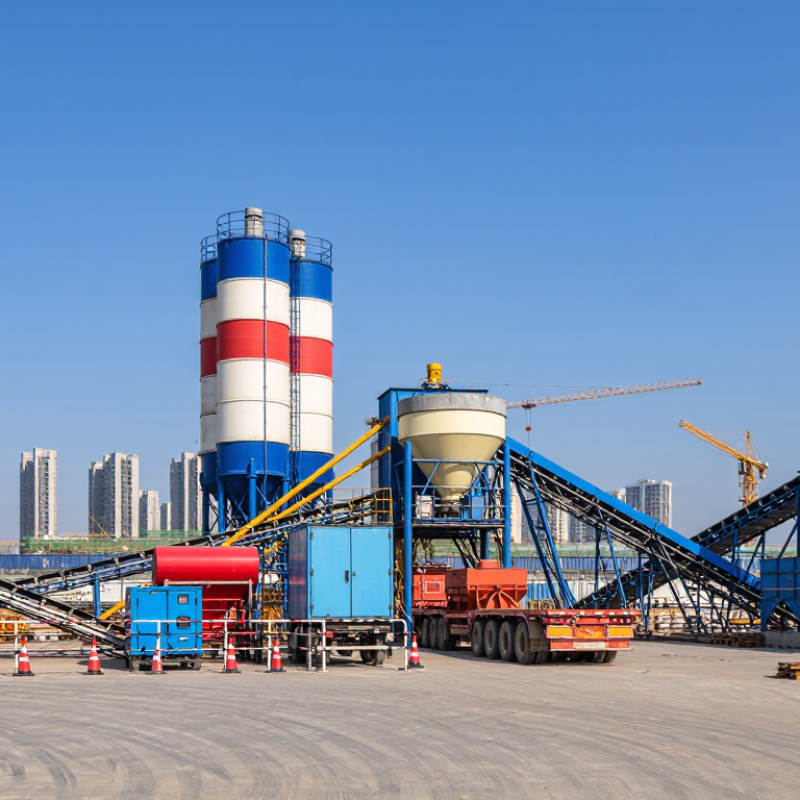
Choosing a concrete batching plant by output starts with the project, not the catalogue. Plants producing 25–60 m³/h suit small building sites, rural roads, and phased foundations. They usually need less space and simpler material handling. According to the Global Cement and Concrete Association, global concrete production reaches roughly 14 billion cubic metres annually. Yet local demand can change sharply.
Medium plants producing 60–120 m³/h fit residential developments, warehouses, and urban infrastructure. A 90 m³/h plant theoretically supplies 720 m³ during an eight-hour shift. Real output is lower. Loading delays, moisture changes, truck availability, and cleaning time reduce efficiency. This practical gap is often overlooked. Technical guidance from ACI 304R stresses controlled batching, consistent mixing, and suitable delivery planning for reliable concrete quality.
High-capacity plants, ranging from 120–240 m³/h, support dams, airports, highways, and large commercial projects. They require stronger aggregate storage, multiple cement silos, and coordinated dispatch. The 2024 Global Construction Perspectives report continues to identify infrastructure investment as a major driver of construction material demand through 2030. However, maximum capacity is not always the best purchase. A 240 m³/h plant may remain underused on a smaller site, increasing capital and maintenance pressure. Output figures should be checked against actual cycle time, concrete mix design, site access, and peak-hour delivery needs. Some specifications look impressive on paper. Field conditions decide the result.
2026 Top Types of Concrete Batching Plants for Sale
Stationary wet-mix plants deliver 60–240 m³/h for major construction projects. They combine measured aggregates, cement, water, and admixtures inside a central mixer. This process supports consistent concrete for bridges, tunnels, high-rise foundations, and long road sections. A 60 m³/h plant may suit a regional project with steady demand. Larger sites may need 120, 180, or 240 m³/h capacity. Bigger is not always better.
On an active site, production depends on more than the mixer rating. Aggregate moisture can change the water balance quickly. Calibrated load cells help protect mix accuracy. Twin-shaft mixers often provide strong blending within short cycles. Separate cement silos reduce refill interruptions. Operators should also check conveyor access, mixer wear plates, dust control, and emergency stops before purchase. Small delays become expensive when concrete placement cannot pause.
Real output usually falls below the advertised maximum. Traffic, truck availability, material shortages, and cleaning time affect hourly production. A 240 m³/h plant may be excessive for a site receiving only 40 trucks daily. That choice wastes space and increases maintenance exposure. I would compare expected demand, peak placement speed, and local service support. The calculation may still be imperfect. Site conditions change. A practical control system should record batch weights, moisture readings, water usage, and production gaps for later review.
Stationary Wet-Mix Plants: 60–240 m³/h for Large Projects
Stationary wet-mix batching plants are commonly selected by nominal concrete output. Capacities from 60 to 240 m³/h cover applications ranging from commercial buildings and bridges to highways, dams, precast production, and other large infrastructure projects. Actual output depends on mix design, aggregate moisture, loading efficiency, and site conditions.
Mobile concrete plants are a practical choice when projects move between roads, bridges, housing sites, or remote foundations. Their output commonly ranges from 25 to 120 m³/h, covering small repairs and demanding construction schedules. A compact 25–40 m³/h plant suits limited pours and narrow access roads. Larger 60–120 m³/h models support continuous production for highways and industrial slabs.
Trailer-mounted plants can be transported between sites with less dismantling. Some designs use folding frames, while others require a crane for setup. The right choice depends on transport permits, ground conditions, and available power. Before purchasing, check aggregate bin volume, cement scale accuracy, mixer capacity, and control-system records. These details affect consistency more than advertised output. In field use, actual production may fall below the rated figure because of loading delays, moisture changes, or truck availability. That difference deserves honest planning.
Tips: Measure the site entrance first. Leave space for aggregate stockpiles and washout control. Test local sand moisture before calibrating the plant. Keep spare load cells, sensors, and conveyor parts available. Ask for service training and clear maintenance intervals. A fast setup is valuable, but rushed calibration can create uneven concrete.
Personally, I would compare hourly output during a real trial, not only trust a brochure. Small mistakes become expensive during a long pour.
Dry-batch concrete plants produce concrete by weighing aggregates, cement, water, and admixtures separately. The materials then enter transit mixers for blending during loading or delivery. This arrangement supports capacities from 30 to 150 m³/h, depending on batch size, loading speed, and truck availability.
The Global Cement and Concrete Association estimates that roughly 30 billion tonnes of concrete are used worldwide each year. USGS Mineral Commodity Summaries 2025 reports global cement production near 4.1 billion tonnes in 2024. These figures explain the demand for flexible batching systems, but they do not guarantee site productivity.
A 6 m³ truck requires five loads hourly at 30 m³/h. At 150 m³/h, the same plant needs twenty-five loads hourly. That fleet requirement is easy to underestimate.
Field experience shows that aggregate moisture can change mix accuracy quickly. Operators should check stockpiles throughout the day, not only during morning calibration. Transit mixers also need consistent loading sequences and enough travel time for blending. The Federal Highway Administration highlights batching control, moisture adjustment, and uniform mixing as key quality factors. Real sites rarely behave perfectly. Traffic delays, wet sand, and uneven truck spacing reduce output. I would treat the advertised capacity as a ceiling, not a promise. That gap matters.
2026 Top Types of Concrete Batching Plants for Sale
Compact and tower batching plants suit projects where land, vehicle access, and setup time are tightly restricted. Compact models commonly deliver 30–120 m³/h, while tower layouts can reach 180 m³/h with a smaller ground footprint. Their vertical arrangement reduces conveyor runs and keeps aggregate storage above the mixer. That matters beside highways, industrial yards, and dense construction zones.
In field planning, I check truck turning space before comparing rated output. A plant may produce 120 m³/h on paper, but poor access can reduce actual delivery. Compact units often use modular frames, allowing staged installation on prepared foundations. Tower plants need careful structural checks, lifting plans, and reliable material flow. The loading area should also keep dust, wash water, and traffic separated.
Small details affect performance. Moist sand can change batching accuracy. Cold mornings can delay the first load. In practice, operators need clear calibration records, spare sensors, and safe access to inspection points. A 30 m³/h plant may be more practical than a larger model when daily demand is uneven. I would not choose capacity from peak production alone. Site distance, aggregate moisture, maintenance skill, and concrete dispatch timing deserve equal attention. Some layouts look efficient in drawings, yet feel awkward during cleaning. That is worth testing before purchase.
